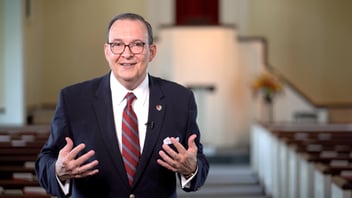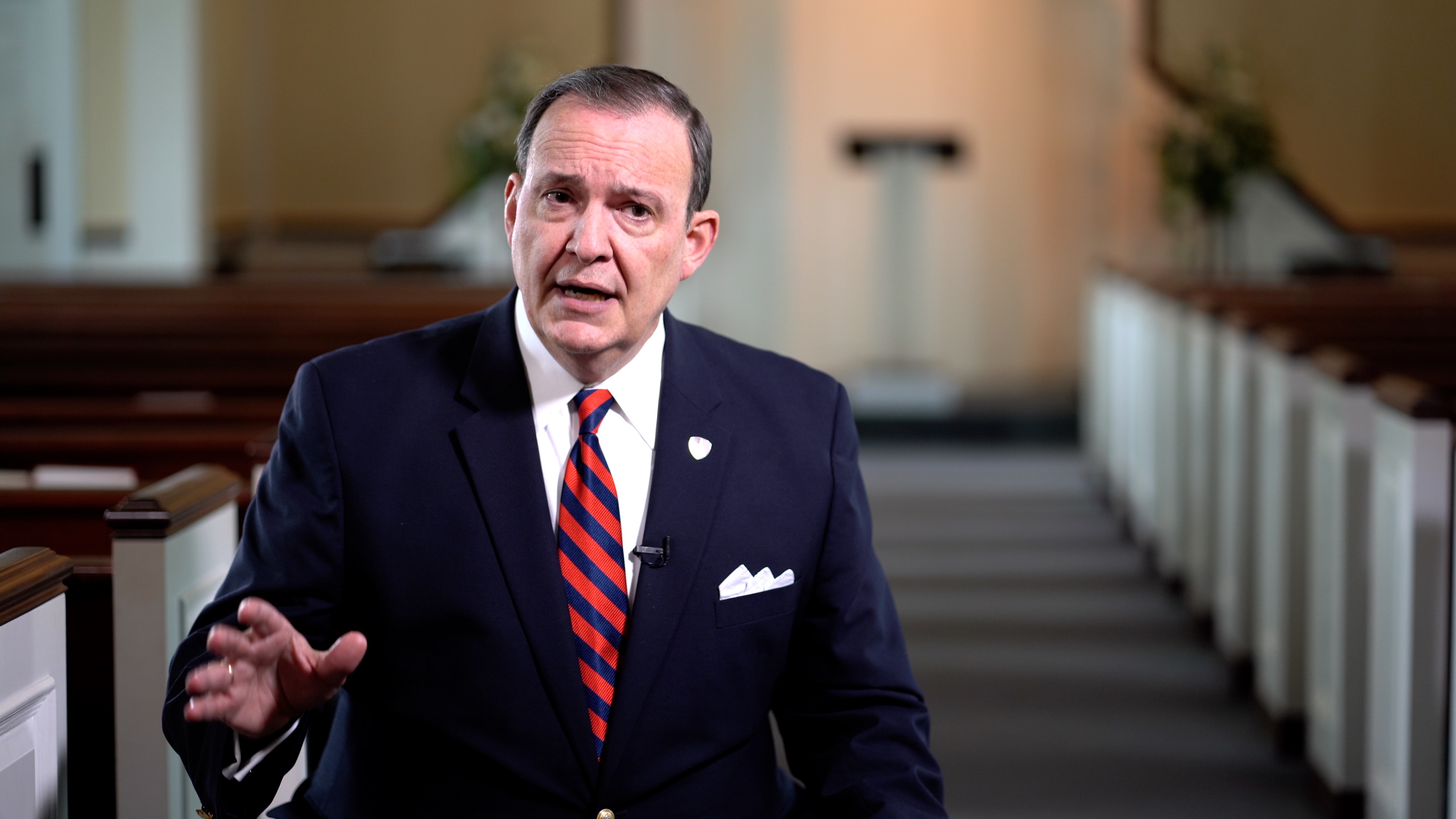
Praying without ceasing will not happen without practice and planning.Holmes: So this week our topic is prayer. In 2016 you answered the question, "How do I pray without ceasing?" via Wisdom Wednesday, our weekly Q&A video series. I wanted to bring you back to elaborate more on that particular topic. But before we go any further, we're going to play that clip of your answer to that question: How do I pray without ceasing? Duncan: Praying without ceasing will not happen without practice and planning. All of us, I think, want to grow in our practice of prayer. I have a dear friend who often says, "If you want to humble a Christian, ask him about his prayer life." I think most of us would love to grow in our practice of prayer. One thing is: pay close attention when you come into contact with praying Christians. I know that my getting to know Mark Dever, the pastor of Capitol Hill Baptist Church in Washington, DC, and my getting to know, Doug Kelly, a professor of theology at RTS in Jackson and in Charlotte, had a profound effect on my prayer life because in those two men I met men of prayer. They didn't think about prayer. They didn't just write about prayer. They prayed. They had a robust, healthy practice of prayer. Being around people of prayer helps you to grow in prayer. You don't just admire them; you seek to emulate them, and you learn from them in their practice of prayer. I thank God every day for those two men who, because they lived a life of prayer, invited me into a better understanding of what it means to be a praying person.
Being around people of prayer helps you to grow in prayer.Here's the other thing: pray. You've got to start praying. And if you don't know how to start or how to get yourself started, open up the Bible to the Psalms and just start praying the Psalms right back to God as if they are your prayers that you wrote or thought up yourself. Take the Psalms, start praying the Bible back to God. That is one of the best ways to learn how to pray without ceasing. It's just to learn how to take the Bible and turn it back to God in prayer. Because for all of us, there are going to be days when we get up in the morning and we cannot get words out of our mouth. There'll be a variety of reasons for that. Sometimes there's a great burden on us. Sometimes there's a great sadness on us. Sometimes we feel cold and distant from God. In those times we just need to go to the Bible and start praying the Bible back to God until we can pray. The Puritans used to say, "Pray until you pray." By that they meant they understood that sometimes we just can't pray. We feel like our words are hitting the ceiling and they're coming back to us. And what do you do? You take the Bible, you start praying it and praying it and praying it until you realize that you're praying, you're talking to God, your soul is doing business with God. Then I would simply say this: you're going to have to plan. You're going to have to have regular practices that are woven into your life that allow you to pray regularly. Obviously, one of those things is learning to pray the first thing when you get up in the morning and the last thing before you go to bed at night. Weaving prayer into the regular life of your family, not just around prayers at meal times, but family prayers. Sometimes I'll take a book of prayers, and I will make it my practice to pray those prayers at different times of the day, especially starting first thing in the morning. All of those things are good ways to learn how to pray without ceasing. Find good examples and learn from them, pray the Bible back to God, and then just plan to pray. All those things will help you pray without ceasing.
Here's the other thing: pray. You've got to start praying.Holmes: Dr. Duncan, would you mind giving us a definition of prayer or a brief Christian theology of prayer? Duncan: Sure. Phillip, there's this great story that when Dwight Moody was in London doing some of his evangelistic crusades, a man came to visit him at the home where he was staying, deeply moved about some things that he had preached about and really wanting to talk about what we're talking about today. He didn't know how to pray, and he was seeking some advice from Mr. Moody on how to do that. He asked Mr. Moody, "What is prayer?" And before he could answer, the daughter of the man who owned the house where Moody was staying, she comes tripping down the stairs, and she overhears the question. She's a little girl. I don't know how old she is, maybe seven, eight, nine years old. She hears the question, "What is prayer?" And she says, "Prayer is an offering up of our desires unto God for things agreeable to his will in the name of Christ, with confession of our sins and thankful acknowledgment of his mercies." Mr. Moody turns to her and he says, "Ah, the catechism. Thank God for the catechism." So she quoted the Shorter Catechism answer to "What is prayer?" So that's a great answer to the question: what is prayer? Fundamentally, it is a lifting up of our desires unto God for things agreeable to his will in the name of Christ, with confession of our sins and thankful acknowledgment of his mercies. That's a really good definition of prayer. An even simpler one would be to say prayer is talking with God. It's the soul communing with God. It involves praise, it involves thanksgiving, it involves requests, and it's best done by looking at how prayer is done in the Bible. So that, for me, has been a really significant part of my own spiritual journey, Phillip, is just realizing how much the Bible helps us to know how to pray. Holmes: That's good. Would you talk about prayer and Bible reading and how the two are related? Duncan: Yeah, well, Philip, I agree with you. If it's an overgeneralization, it's a helpful overgeneralization. If I can produce a couple of witnesses to that. One is R. C. Sproul. I remember about 15 years ago, R. C. saying that it was Archie Parrish who had really helped him grow in the practice of prayer. R. C. said, "I really felt like I had been trying to fly with one wing most of my life, reading the Bible, studying the Bible, studying theology, but not adequately having a good practice of prayer." Archie, using some of the kind of resources we've been talking about on this podcast, had really helped R. C. in his practice of prayer. From that time on, R. C. would always have Archie come to his national conferences to do a breakout session on prayer, just to help people pray. Also, our mutual friend, Derek Thomas. I can remember Derek saying one of his favorite sayings was, "If you want to humble a Christian, ask him how his prayer life is." And I do think, especially among young, Reformed believers, it can be easier to study the Bible or study theology or study good theological books than it is to pray. I think there are a lot of reasons for that, but I do think that the very best way to study the Bible is to turn what you're studying into prayer to God so that you make sure that the theology doesn't simply reside in the realm of facts and information and opinion and views. It's not something just to know and certainly not just to debate or argue about. It's something that's meant to transform the whole of your life. One of the best ways to make sure that that happens is when you study the Bible, turn it into prayer back to God, and ask him to do what he will with that truth and what he intends to do with that truth in your life.
Especially among young, Reformed believers, it can be easier to study the Bible or study theology or study good theological books than it is to pray.Holmes: That's really helpful. That's good. I love that reference that Dr. Sproul made in regards to trying to fly without one wing. That puts it into perspective. Is there a way that Christians should structure their prayers? Duncan: Yeah, I do think it will help Christians if they'll spend just a little bit of time thinking about how they structure their prayers. There's not just one right way to do it. If you don't plan and structure prayer at all, it can leave you feeling unresolved. I think if Christians will think a little bit about what ought to be in a prayer and then a little ahead of time about how they're going to move through the various parts of prayer, it will help them. They could, for instance, follow the order of the Lord's Prayer. If you're praying through the Lord's Prayer, first you're praying that God's name would be honored: "hallowed be thy name." Then you're praying that God's kingdom would come and advance and triumph: "thy kingdom come." Then you're praying that God's will will be done. Then you're praying that the Lord would supply you your daily bread, and then you're praying that God would forgive you and would not lead you into temptation. So that's one way that you could structure prayer. But a lot of people use adoration, confession, thanksgiving, and supplication (ACTS) to make sure you're covering some of the major parts of biblical prayer. There are also little prayers, and if you pick up a copy of the Book of Common Prayer, they will be filled with little prayers called collects. Collects are prayers that usually have a set number of small parts that are included in them. I think looking at good prayers, either Bible prayers or prayers that have been written by godly people over the course of time, and studying what their structure is, can actually help us pray a little bit better and kind of know where our prayer is going, certainly if we're leading prayer publicly. Holmes: That's extremely helpful. Thank you for that. So if God is sovereign, why should we bother praying? Duncan: Yes, first of all, it's not surprising to hear people ask the question. Our mutual colleague, Dr. Douglas Kelly, who taught here in Jackson in the theology department for many years and then taught at RTS Charlotte for many years and is recently retired, Dr. Kelly even wrote a book called If God Already Knows Why Pray? So it's natural that people would ask if God's sovereign and he knows everything, why should we pray? Because he already knows it and if he's sovereign and he is in control of everything, why should we pray? Because he's in control of everything. He's got the whole world in his hands. The biblical logic to that is because God is sovereign, our prayer matters because God has appointed prayer to be one of the principle means that he uses to accomplish his will. Very often, the way he plans for his purposes to be fulfilled in the world is through the prayers of his people. One old theologian used to say, "When God is preparing to bless his people, he sets them a-praying." I think if more Christians realize that, we would be more motivated in our prayers. We would realize our prayer really does matter, not because we're changing God's mind, not because we're telling God things that he doesn't know, but because prayer is the means by which he plans to bless us and carry out his will. So when we're praying, we are actually being instruments of the sovereignty of God to work his will out in the world. That's very exciting. It's exciting to be a partner with God in his purposes. That's what he does when he hears our prayer and uses our prayer.
When we're praying, we are actually being instruments of the sovereignty of God to work his will out in the world... It's exciting to be a partner with God in his purposes. That's what he does when he hears our prayer and uses our prayer.Holmes: If someone is struggling to believe in the efficacy of prayer, what would you recommend that they do? Duncan: That's a great question, Phillip, and I think there are a number of different answers. One is, of course, to pay attention to answered prayers in the Bible because sometimes we may be missing answers to our prayers. For instance, you may have someone that prays a very specific prayer that doesn't come about in the way that, in their mind, they expected that prayer to be answered. But they may have missed the answer to that prayer because God answered that prayer unexpectedly. I had a professor that encouraged me in seminary to keep a prayer journal. I was recording what prayers I was praying so that I could go back and study God's answers. I do think that if we don't pay close attention to the answers that we get in prayer, we can actually miss answers that we are getting in prayer, and we can miss the way God in his providence is indeed answering our prayers. Calvin used to say God answers our prayers not as we pray them, but as we would pray them if we were wiser. Sometimes the answer that we're anticipating is not the way that God answers the prayer, but he does answer the prayer. Unless we take note of that, it's real easy to start thinking, "Oh well, God's not hearing my prayer." But when you look back on your life and you see how God has protected you or spared you or redirected you, you can see signs of God answering our prayers as we would pray them if we were wiser. You can see that in the Bible, but you can also see that in the Christian life.
Pray with brothers and sisters so that they can remind you of God's answers to prayer.The other thing is pray with brothers and sisters so that they can remind you of God's answers to prayer. I've had that happen more than once where somebody will remind me of a prayer that I've prayed, that I've forgotten that I prayed, Phillip, and lo and behold, God's answered the prayer, and I forgot that I even prayed it. Praying with brothers and sisters is a huge encouragement and help in that regard. Holmes: Amen. We're wrapping up. Would you talk about the effectiveness of prayer as action? Duncan: I would say a few things by way of encouraging believers in their prayer lives. One is, I would say just learn to pray the Bible. No matter what's happening in the world, the most important things in this world is the kingdom of our Lord Jesus Christ and the work that God is doing. No matter what country we're in, no matter what's going on, no matter how high pitched the political fervor is, the kingdoms of this world have become the kingdom of our Lord and of his Christ and he shall reign forever and ever. Being guided by the Bible really helps us in our prayer life to rise above the petty divisions and even the serious and important divisions that exist in the world and recognize that God is something that is bigger than any nation, bigger than any election, bigger than any war or circumstance or anything else in life. As believers, we're to be caught up in those things. We're to have our eyes on God.
No matter what's happening in the world, the most important things in this world is the kingdom of our Lord Jesus Christ and the work that God is doing.I would also say that reading good books on prayer has been a help to me in my prayer life. Don Carson's Praying with Paul has been a book that helped me a lot. Of course, Matthew Henry's Method for Prayer helped me a lot. Kenneth Boa has produced a number of books on prayer. One of them is just called Handbook to Prayer, and it's subtitled Praying Scripture Back to God. There are shorter prayers than you get in the Matthew Henry Method for Prayer. But they are scriptural prayers just prayed right back to God. I think praying scripture back to God is just the key in learning how to pray. Then there have been other books. I love Valley of Vision by Arthur Bennett, which is a selection of Puritan prayers. Isaac Watts's Guide to Prayer. There are a lot of really good books out there to help you to pray. But for me, the big thing is turning the Bible into prayer. When you're reading a psalm, turn that psalm into your prayer to God. Read it as a part of your Bible study in your devotion, but turn that thing back around into a prayer from you to God. If you do that enough, that stuff will get down in your bloodstream. It can settle you down in tumultuous, turbulent times, realizing that God is sovereign over all, and he has good purposes at hand. I think those are good things to bear in mind as we want to improve our prayer.
Praying scripture back to God is just the key in learning how to pray.Holmes: That's super helpful. Thank you so much, Dr. Duncan, for sharing that with us. Duncan: Thank you, Phillip. Holmes: Thank you for tuning in, and we hope that you enjoyed this week's episode featuring Dr. Ligon Duncan. I would also like to thank the RTS family, church partners, students, alumni, and donors for the many ways you make the work of Reformed Theological Seminary possible. The clip we listened to earlier is from our weekly video series Wisdom Wednesday, where relevant matters of the Christian faith are addressed by RTS faculty and friends with truth, candor, and grace. You can access our entire archive or submit a question at rts.edu/wisdom-wednesday. Mind + Heart is powered by Reformed Theological Seminary, where we desire to raise up pastors and other church leaders with a mind for truth and a heart for God. Thank you.