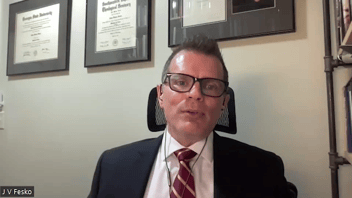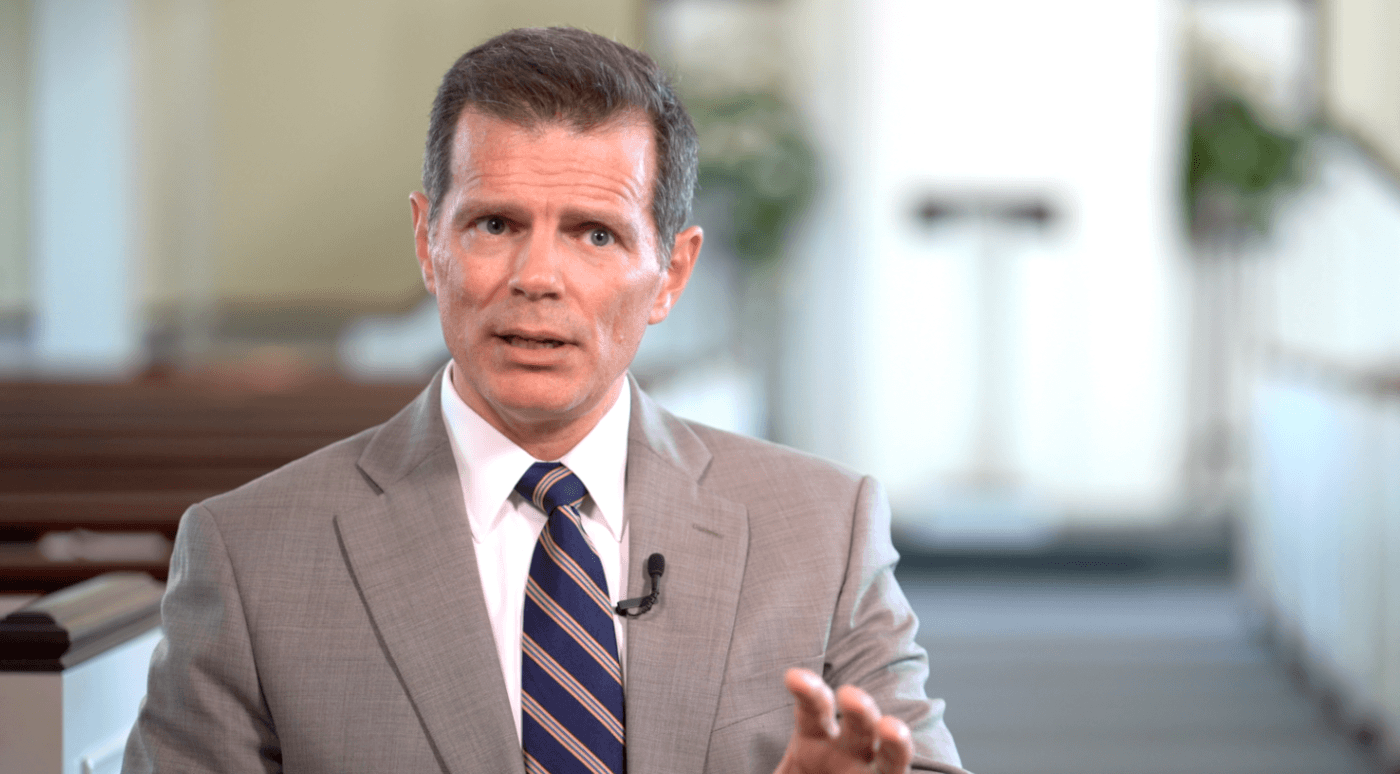
Are we using the technology or is the technology using us?That's essentially how the book, a little devotional book, developed in that I wanted to be a good dad, but at the same time, I also wanted to hopefully give Christians some thoughtful material to meditate upon. Paul says in Romans 12 not to be conformed to the patterns of this world. So often in life, we can do things, use things, and we don't necessarily think about them too much. I want to say, "Hey, let's stop. Let's give some careful consideration as to how we're using the technology in our life, to ask ourselves the key question: "are we using the technology or is the technology using us?" Holmes: That's really helpful. Thank you for sharing that. In 2019, Dr. Fesko answered the question "What are the pros and the cons of technology for the church?" via Wisdom Wednesday, which is our weekly Q&A video series. So before we go any further, let's take a moment and listen to Dr. Fesko's response to that question: what are the pros and cons of technology for the church? Fesko: What are the pros and cons of technology for the church? I think technology is a fantastic God-given gift that he has blessed us with. There's a sense in which we can say that all of the things that we make, the various technological advances that we have—whether it's video cameras, whether it's iPhones, whether it's tablets, whether it's computers, whatever the case may be—those are things that we create and, in a sense, analogously create as God has created. God created us and the world around us, and he gave us imaginations, he gave us intelligence, he gave us abilities to be able to create and in that way echo the brilliance, the imagination, and the creativity of our maker. So I don't want to denigrate the importance of the technological advances that we have.
Technology is a fantastic God-given gift that he has blessed us with.On that note, I think one of my most useful devices is my smartphone. It's a moving classroom for me where I can pop a lecture in, and I can listen to it while I'm in the car. Or I can punch in an address, and it can get me safely to a location that I've never been to before. I have a copy of the Scriptures on there. I'm able to text my wife. There are so many benefits to my phone. But on the other hand, we should ask ourselves: What is it that this technology is doing to us? One of the things C. S. Lewis said is that for every technological advancement that we make, we become stronger in certain areas, but in other areas we become weaker. For example, it's a blessing that I can carry a copy of the Scriptures on my phone in my back pocket. But on the other hand, am I tempted to not memorize God's Word because I have it so conveniently and readily available, so much so that I cease to write the Word of God upon the walls of my heart? Because I think, "Well, I have it here in my hand. What need do I have to carry it in my heart?" Or for example, we think, "I've got access to this screen, and I'm going to watch a movie, I'm going to text my friends, I'm going to surf the Internet, I'm going to email someone, and I'm also going to read God's Word." What does it say when we are reading God's Word—which is ultimately a sacred book, something that is holy, something that is supposed to be set apart—and it is something that we read in the same place that we watch movies? Are they questionable movies? Are they edifying movies? It's something where we text someone. Are we always texting someone something that is edifying? Maybe it is, but on the other hand, as you pick up that phone and you go to read God's Word, are you expecting a text to come through, and does that break your concentration? Are you thinking that maybe you need to get out on social media because you forgot to put something on your Facebook account? Those things end up distracting us from God's Word.
For every technological advancement that we make, we become stronger in certain areas, but in other areas we become weaker.I don't want to say that having God's Word on your smartphone is a bad thing, but we should always use technology in a critical manner. In other words, try to determine: What are the benefits, what are the inherent weaknesses in the technology, and what steps can I take before I use this thoughtlessly? Because in the end, we want to make sure that it's us who uses the technology, rather than that the technology is using us. Holmes: Dr. Fesko, recently a new documentary was released entitled The Social Dilemma. The film explores the rise of social media and the damage it has caused to society, focusing on its exploitation of its users for financial gain through surveillance, capitalism, and data mining. Have you had an opportunity to view that documentary? Fesko: Yes, my wife and I actually got a chance to watch it. In fact, we finished watching it last night. Although, because we're parents of children, it took us three nights to watch the 90-minute documentary. You're just so tired by the end of the day, you can just do it in 30-minute installments. But we finished it last night, and it was a really interesting and eye-opening documentary with a lot of a lot of food for thought, to say the least. Holmes: Give us some of your thoughts on how you think social media is changing us as a culture and specifically even as Christians. Fesko: I think one of the things that the documentary touched upon is that the engineers and the scientists that have both constructed the software as well as the platforms in which we use it (typically our smartphones), they design it specifically with an addiction kind of ethos to it. They want to keep you hooked into the medium. A second observation that I took away from this documentary is that you end up creating a virtual world that is tailored to you. That's not necessarily always a bad thing, but too much of it and what happens is that you end up living in your own digital echo chamber. If we contrast that with ideal life in the church where you're talking with people from different walks of life, hopefully different political points of view, different types of life experience, different age groups, you're going to get exposed to a lot of different ideas. It's going to be helpful to you in growing and maturing as a person. But if you're locked in that digital echo chamber where you're just looking and reading and watching things that are essentially ultimately usually a reflection just of yourself, then what ends up happening is that it creates a polarization factor. We're used to having our world tailored to us, and it stunts our ability to engage with others, especially when it comes to differences of opinion. Because it's a medium that is typically geared towards short bursts of communication (say on Twitter, 140 characters at a time), it can often seriously hamper our ability to engage in fruitful and meaningful dialogue. One of the things that this documentary notes is that the engineers and scientists who are saying, "Hey, wait a minute, what are we doing?" They really believe that social media and this technology has contributed to the incredibly polarized nature of our nation at the present day. I want to say that there are probably some other factors, but I do think that it's probably a huge contributing factor. Those are certainly things that we want to be aware of.
We're used to having our world tailored to us, and it stunts our ability to engage with others, especially when it comes to differences of opinion.I think one of the things that they said, which I think is true, is that I don't think the technology is going to go away. And so the question is: how can we carefully and wisely use it? Again, to bring up that question, to make sure that it's not using us and rather that we're using it in a wise and in a prudent manner. Holmes: That's really good. I also had this conversation with Karen Ellis, who does a lot of research on Christian endurance, and she's the director of the Edmiston Center at RTS Atlanta. One of the things that I mentioned to her is the way that these algorithms are set up . . . As a marketer, much of this information isn't surprising at all. It's a tool that many marketers have been leveraging for years. The amount of data that Facebook has on its users, where we have the ability to target people very specifically, is amazing, but also a bit frightening as well. A lot of the information that was coming out of this wasn't very surprising. The other part, though, is that I think that it has contributed to more prejudice in our society. Before you had to talk to a person to know their views on politics or controversial cultural matters. Now you can simply scroll their Facebook or their Twitter to get short takes, sometimes even hot takes, on what they believe about these various things. It keeps those relationships from developing because you already think that based on their timeline, you know this individual when, as you pointed out, especially on Twitter, you don't really get the full context of what a person thinks. You get a soundbite, and soundbites are the worst when it comes to really understanding an issue and dialoguing. I think Facebook, Twitter, and all these things, they were marketed as a way to network and connect people to each other, and the reality is it has done more to divide in a lot of ways. I think that what we're experiencing right now in some ways as it relates to technology is probably some sort of mental health crisis that needs to be addressed. But there's also a spiritual crisis as well, which is why I'm excited to have you engaging this particular topic. When should someone get to a point where they should consider getting rid of their smartphone? Fesko: Yeah, it's going to vary from person to person, but there are a couple of things that you can always look out for. One of the things that I've personally tried to do is to avoid looking at my phone the very first thing that I wake up in the morning. It may sound a little bit like a holy roller, but I say, "Let me try to spend some few minutes in prayer in the morning first thing so that I can hopefully set my trajectory on a good path in the presence of God rather than seeing what's the latest tweets, what's the latest news, what kind of emails have I received." That's the first observation.
If it keeps you from interacting with the flesh and blood people in your life, then that's probably a good sign that maybe you need to put it down.A second observation is: how long can you be away from it without—I don't know what you want to call it—without "jonesing" for it, without kind of feeling that twitch in your hand that you've got to have it. Where sometimes that will often come up—and it's in that Netflix documentary that we've been talking about—is when you're sitting down with your family, say at a meal, are you really engaging with your family or are you distracted by the device? I would say that if it keeps you from interacting with the flesh and blood people in your life, then that's probably a good sign that maybe you need to put it down, whether that means you need to put it in a box and lock it away or whether it just means you set it down for a couple of hours, it's going to vary. But basically you want to look for signs of addiction. Can I live without this thing for a couple of hours? Can I live without it for a day or two if necessary? Is it becoming an obstacle between me and the people in my life? If it is, like if you find yourself texting your family, and they're in the same building, maybe you need to put it down and go talk to them. Those are just some kind of quick off-the-cuff observations about it. But I would say too, maybe a psychological question to ask is: do you find yourself unnecessarily depressed? That's a huge dimension of this, because social media, whether it's Instagram or Facebook or what have you, oftentimes people will only put the very best of what happens in their life on social media. Sometimes you do, but you don't typically see people at their worst. If you find yourself thinking, "Why isn't my life as good as their life?" I want to remind us that this is just a microscopic snapshot of somebody's life. It's not a whole picture of it. Don't judge your life based upon what you see on social media and therefore allow it to negatively affect you. Remember, we're Christians. We're in union with Christ. It's Christ who should define our happiness and our joy and who we are, as well as the people that we're connected to in our life. Those are just some observations that I would say we should think about as we're using social media or our devices.
Don't judge your life based upon what you see on social media and therefore allow it to negatively affect you.Holmes: That's really helpful. Would you mind giving us a few ways that you have used (to end on a positive note) technology for Christian growth in your own life? Fesko: Google is in the process of scanning all of the world's books. The last I checked, they're somewhere at around 25 to 30 million of the 125 or 130 million books that exist. I've been able to use scans of books from antiquity, from the Middle Ages, from the 16th-17th centuries that in previous generations would have taken me years to get access to either because of money or traveling. That's a huge benefit. As much as I love physical books and writing in them and marking them up, scanned books is a benefit. The second way: I feel like I've been able to keep in touch with students over the years that otherwise I probably wouldn't have been able to keep in contact with, whether it's through social media or email or Facebook. That's something that I've been able to appreciate. Just yesterday, I got an email from a former student. He was a little discouraged because some of his plans didn't work out as he had hoped. I was able to pass along an encouraging word to him.
It's Christ who should define our happiness and our joy and who we are, as well as the people that we're connected to in our life.A third way is social media. One of the things I love about Twitter and the folks that I follow is I love to see what they're reading. As I see, "Oh, wow, that looks like a fascinating book." Or sometimes when I see some of the other people engaging some of the various cultural issues that we're facing, I like to see what they have to say about it or resources that they might point me to that I might not otherwise be exposed to because I can't interact with these people in person. Those are just a couple of examples of the ways that I've benefited from the technology. I think that we have to remember that we've always faced the question of technology. It's always going to be there. It's always going to be growing. Personally, while I can appreciate the Amish approach, which says, "I'm going to keep it all entirely at arm's length, at least most of it," I would say, "Let's just be wise. Let's let's try to be more into the world, not of the world, but connected to it, because if we're not connected to it, then we're going to miss opportunities to be able to share the gospel with people, to talk about the Christian faith, as well as to connect with other Christians in the world." There are benefits to it, but we always want to use them cautiously. Just like the Israelites built the tabernacle with Egyptian gold, that Egyptian gold was useful until they turned it into an idol. That's the whole thing that we want to keep in mind: using it but never abusing it. Holmes: That's super helpful. Thank you for that answer. We have a little bit more time. Any other final thoughts on technology that you would like to share with our listeners?
I want to take those warnings seriously, but on the other hand, I don't want to live in fear either. I just want to be discerning.Fesko: The technology in our life, whether we're talking about virtual reality, whether we're talking about screens or computers or social media, there are tremendous blessings. But just remember, don't get caught up in what I would say is the lemming effect where we just follow the crowd and go wherever the crowd is going. Just think twice about the things that we do, give thought to it, be careful, meditate about it. Don't be fearful of life. After watching the documentary, you think, "Oh my word. I think I need to torch everything because this is so dangerous." I want to take those warnings seriously, but on the other hand, I don't want to live in fear either. I just want to be discerning. This is where Christ tells us in the Word that if we seek wisdom and we cry out to him, he'll give it to us. That means that he can help us be discerning Christians so that we can engage our world, use the technology in it, but not be fearful of it, but just make sure that we're being shrewd. One of my favorite verses of all time, Matthew 10:16, "Be as innocent as doves yet shrewd as serpents." I think that that's the way we should be about the technology and the world around us. Holmes: That's good, thank you. And thank you so much, Dr. Fesko, for joining us today. Fesko: Yeah, thanks. It's great to be with you, and I look forward to future opportunities. Holmes: Absolutely. Thank you for tuning in. We hope you enjoyed this week's episode featuring Dr. John Fesko. I would also like to thank the RTS family, church partners, students, alumni, and donors for the many ways you make the work of Reformed Theological Seminary possible. The clip we listened to earlier is from our weekly video series, Wisdom Wednesday, where relevant matters of the Christian faith are addressed by the RTS faculty and friends with truth, candor, and grace. Access our entire archive or submit a question at rts.edu/wisdom-wednesday. Mind + Heart is produced and powered by Reformed Theological Seminary, where we desire to raise up pastors and other church leaders with a mind for truth and a heart for God. Thank you.