In September 2020, the
RTS Board of Trustees’ Executive Committee launched the
Strategic Planning Initiative (SPI). In addition to the SPI’s faculty and staff working team, the board also formed an advisory committee. Two of the six trustees on the advisory committee were Hu Meena and retired Vice Adm. Scott Redd. Redd and Meena’s backgrounds are not what you might expect for a seminary board, but they are pretty typical for the RTS Board of Trustees. As business leaders in various fields, the trustees use their expertise as laymen to help advise the seminary. [caption id="attachment_49620" align="alignleft" width="224"]
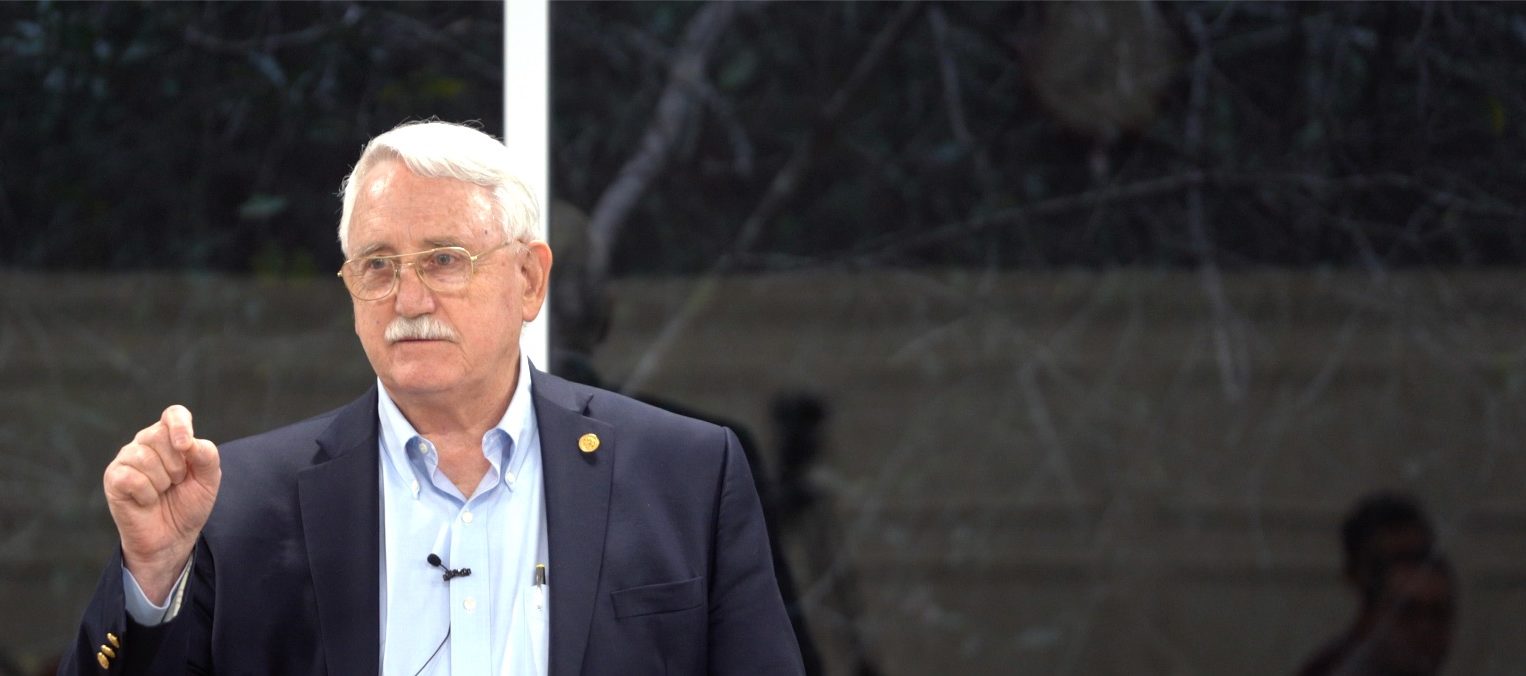
Vice Adm. Scott Redd[/caption] Redd served for 36 years in the Navy, retiring as a vice admiral in 1999. During his time in the military, he also served as the Director of Strategic Planning for the Navy and later as the Director of Strategic Plans and Policy for the entire military on the Joint Chiefs of Staff. After retiring from the Navy, he became CEO of NetSchools Corp, a high-tech start-up company in the education sector. He later returned to government work — first as a deputy administrator and COO of the Coalition Provisional Authority in Iraq, then as Executive Director of the Presidential Commission on Weapons of Mass Destruction, and finally as the first director of the National Counterterrorism Center. Redd’s son,
Dr. John Scott Redd, Jr., has been involved at RTS since pursuing an
MDiv at
RTS Orlando; Dr. Redd is currently president and Stephen B. Elmer Professor of Old Testament at
RTS Washington. After taking a course at RTS Orlando in 2002, Redd joined the board in 2009. Meena is currently Chairman and CEO at
C Spire, a telecommunications company based in Mississippi. Meena helped to launch C Spire in 1988, serving as Vice President of Operations and Development before becoming CEO. He is a longtime member of
First Presbyterian Church in Jackson, Mississippi, and knew of RTS from living in the area. He joined the RTS Board of Trustees in 2014. “After my good friend Richard Ridgway became chairman and our longtime pastor,
Dr. Ligon Duncan, became chancellor, it was easy to answer ‘yes’ when asked to serve on the board,” Meena remembers. “Serving with these two men for whom I have great respect has been a true blessing.”

Hu Meena[/caption] Both Redd and Meena have had to deal with changes during their careers. Meena entered the telecommunications field just a few years after the Bell monopoly was broken up in 1982. C Spire has had to continue changing and growing over the decades, especially in keeping up with new technological advances. “We must continually recreate ourselves,” Meena says of C Spire. “Change fast, or die slow.” One situation where Redd had to lead people through a season of change was after the end of the Cold War: “In response to the changes in the global environment, I proposed, commissioned, organized, and commanded the 5th Fleet, the Navy’s first new fleet since World War II. In that position, I was responsible for developing strategy and plans as well as commanding operations for all naval forces in the Middle East and East Africa.” Change can make people throughout an organization nervous. For leaders who find themselves anxious about change, Meena and Redd offer the same encouragement: “There is nothing wrong with being nervous about making big changes,” Meena says. “If you are not somewhat nervous, you may not be considering making enough change.” “If you’re not nervous, your vision is probably too small,” Redd agrees. The trustees also offer some practical advice for leaders. Redd cites Proverbs 29:18, sharing, “A leader’s first responsibility is to develop and articulate a vision.” Once the vision is in place, it can be translated into concrete goals, answering the question, “What does this part of the vision look like if we execute it with excellence?” Answering that question “requires doing the hard work of prioritization,” knowing what’s central to success. Once a vision is established, Redd encourages prayer and seeking wise counsel in order to execute the plan boldly and with persistence. He also focuses on the need for strong character, including humility to acknowledge mistakes or make course corrections. Throughout the planning and implementation process, keeping the vision in mind helps the entire organization remember “why we’re here and what we’re trying to accomplish.” Meena offers some other vital tools for leaders navigating transitions: “Appropriate, delegate, and communicate.” Ensure that employees have access to resources and capital as needed and empower them. Or, as Redd puts it, “if someone is to be held responsible for a function, they must also have commensurate authority to do what is necessary to fulfill their responsibilities.” Make sure that roles and expectations are clear, and set milestones to see progress toward your goals. “Every team that sets out to make change needs a chance for visible, meaningful wins,” Meena observes. Both Redd and Meena agree that communication is essential during seasons of change. Frequent, honest, and straightforward communication helps others understand the vision and reason for the change and their roles, expectations, and goals.
Vice Adm. Scott Redd[/caption] Redd served for 36 years in the Navy, retiring as a vice admiral in 1999. During his time in the military, he also served as the Director of Strategic Planning for the Navy and later as the Director of Strategic Plans and Policy for the entire military on the Joint Chiefs of Staff. After retiring from the Navy, he became CEO of NetSchools Corp, a high-tech start-up company in the education sector. He later returned to government work — first as a deputy administrator and COO of the Coalition Provisional Authority in Iraq, then as Executive Director of the Presidential Commission on Weapons of Mass Destruction, and finally as the first director of the National Counterterrorism Center. Redd’s son,
Dr. John Scott Redd, Jr., has been involved at RTS since pursuing an
MDiv at
RTS Orlando; Dr. Redd is currently president and Stephen B. Elmer Professor of Old Testament at
RTS Washington. After taking a course at RTS Orlando in 2002, Redd joined the board in 2009. Meena is currently Chairman and CEO at
C Spire, a telecommunications company based in Mississippi. Meena helped to launch C Spire in 1988, serving as Vice President of Operations and Development before becoming CEO. He is a longtime member of
First Presbyterian Church in Jackson, Mississippi, and knew of RTS from living in the area. He joined the RTS Board of Trustees in 2014. “After my good friend Richard Ridgway became chairman and our longtime pastor,
Dr. Ligon Duncan, became chancellor, it was easy to answer ‘yes’ when asked to serve on the board,” Meena remembers. “Serving with these two men for whom I have great respect has been a true blessing.”
Leadership During Change
[caption id="attachment_49414" align="alignright" width="240"]
Hu Meena[/caption] Both Redd and Meena have had to deal with changes during their careers. Meena entered the telecommunications field just a few years after the Bell monopoly was broken up in 1982. C Spire has had to continue changing and growing over the decades, especially in keeping up with new technological advances. “We must continually recreate ourselves,” Meena says of C Spire. “Change fast, or die slow.” One situation where Redd had to lead people through a season of change was after the end of the Cold War: “In response to the changes in the global environment, I proposed, commissioned, organized, and commanded the 5th Fleet, the Navy’s first new fleet since World War II. In that position, I was responsible for developing strategy and plans as well as commanding operations for all naval forces in the Middle East and East Africa.” Change can make people throughout an organization nervous. For leaders who find themselves anxious about change, Meena and Redd offer the same encouragement: “There is nothing wrong with being nervous about making big changes,” Meena says. “If you are not somewhat nervous, you may not be considering making enough change.” “If you’re not nervous, your vision is probably too small,” Redd agrees. The trustees also offer some practical advice for leaders. Redd cites Proverbs 29:18, sharing, “A leader’s first responsibility is to develop and articulate a vision.” Once the vision is in place, it can be translated into concrete goals, answering the question, “What does this part of the vision look like if we execute it with excellence?” Answering that question “requires doing the hard work of prioritization,” knowing what’s central to success. Once a vision is established, Redd encourages prayer and seeking wise counsel in order to execute the plan boldly and with persistence. He also focuses on the need for strong character, including humility to acknowledge mistakes or make course corrections. Throughout the planning and implementation process, keeping the vision in mind helps the entire organization remember “why we’re here and what we’re trying to accomplish.” Meena offers some other vital tools for leaders navigating transitions: “Appropriate, delegate, and communicate.” Ensure that employees have access to resources and capital as needed and empower them. Or, as Redd puts it, “if someone is to be held responsible for a function, they must also have commensurate authority to do what is necessary to fulfill their responsibilities.” Make sure that roles and expectations are clear, and set milestones to see progress toward your goals. “Every team that sets out to make change needs a chance for visible, meaningful wins,” Meena observes. Both Redd and Meena agree that communication is essential during seasons of change. Frequent, honest, and straightforward communication helps others understand the vision and reason for the change and their roles, expectations, and goals.